What Is a Sound Bath? Everything You Need to Know Before Your First Session

If you’ve searched for a “sound bath near me” or wondered what all the quiet buzz around
sound healing in Orange County is about, you’re not alone. Sound baths have moved from
niche wellness circles into the mainstream, showing up in yoga studios, spas, corporate
wellness programs, and now, boutique studios like ours here in Lake Forest, California.
But what exactly is a sound bath? Is it meditation? A concert? A massage for your ears? And
Is there any real substance behind the growing popularity, or is it simply a wellness trend?
This guide answers all of that. We’ll walk through the history of sound baths, what actually
happens during a session, the science behind why people feel calmer afterward, and
Everything you need to know before attending your first one — whether you’re in Lake
Forest, elsewhere in Orange County, or anywhere in California.
What Is a Sound Bath?
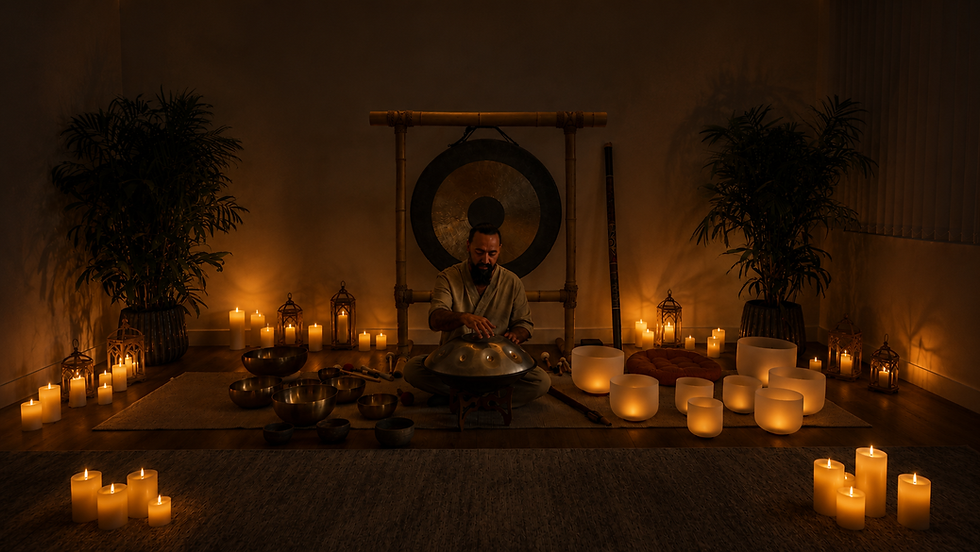
A sound bath is a guided relaxation experience in which participants lie down or sit
comfortably while a practitioner plays a series of instruments — often Tibetan singing bowls,
crystal singing bowls, gongs, and sometimes handpan — to create layers of resonant sound.
Unlike a concert, a sound bath isn’t something you actively listen to for entertainment. It’s
something you rest inside of. The term “bath” refers to the way sound waves wash over and
around you, filling the room the way water might fill a tub. There’s no rhythm to follow, no
lyrics to interpret, and no performance to watch. You simply lie back, close your eyes, and
let the sound do the work.
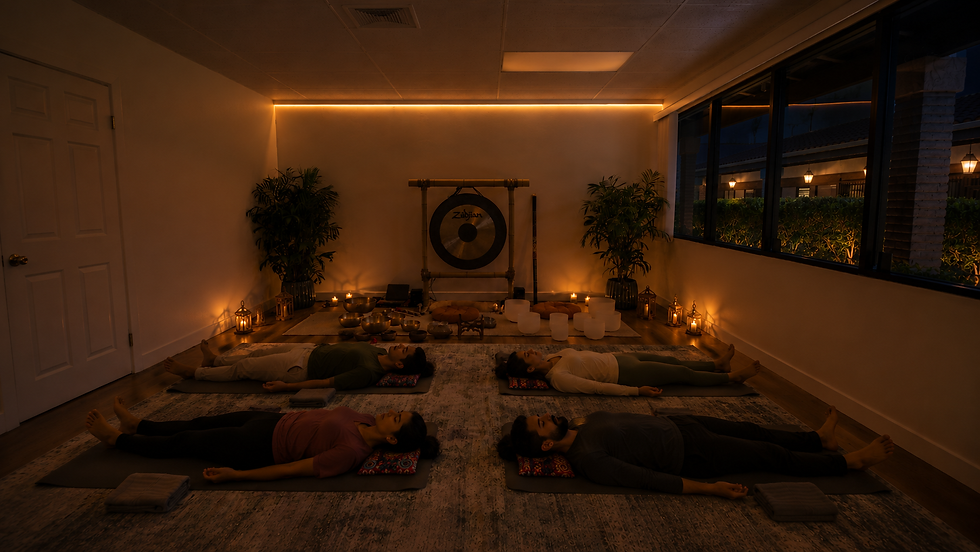
Most sessions last between 45 and 75 minutes and are typically practiced lying down on a
yoga mat, cushions, or a massage table, often with a blanket for comfort. Some studios,
including ours, also offer sessions where large Tibetan singing bowls are placed on the body directly, allowing participants to feel the vibration as much as hear it.
Sound baths are generally categorized as a relaxation and mindfulness practice rather than
a medical treatment. They’re best understood as a structured, sensory form of rest — closer
in spirit to meditation or restorative yoga than to a spa treatment or clinical therapy.
The History of Sound Baths
While the term “sound bath” is relatively modern, the practice of using sound intentionally
Rest, ritual, and community are ancient and found across many cultures.
Bells, bowls, drums, and gongs have been used in ceremonial and communal settings for
centuries across parts of Asia, the Middle East, and the Americas, often to mark transitions,
Support meditation, or bring a group of people into a shared state of stillness. Gongs, in
particular, have a long history in ceremonial and meditative use across parts of Asia, prized
for the way a single strike can generate a full spectrum of overlapping tones.
The modern Western sound bath, as it’s practiced today, really took shape in the 20th
century as sound and meditation practices from various traditions were adapted into secular
wellness settings. Musicians and meditation teachers began experimenting with combining
instruments — singing bowls from the Himalayan region, gongs, and later, quartz crystal
bowls developed in the 20th century for their clear, sustained tones — into a single,
immersive listening experience designed purely for relaxation rather than religious
ceremony.
Over the past decade, sound baths have grown rapidly in the United States, particularly in
California, as part of a broader interest in mindfulness, breathwork, and low-impact wellness
practices. Today, you’ll find sound baths offered in yoga studios, wellness centers, and
dedicated sound healing studios throughout Orange County and beyond — evolving from a
Niche practice into an accessible form of guided rest.
Why Sound Baths Have Become So Popular
It’s worth asking: why now? A few forces have converged to make sound baths one of the
fastest-growing wellness offerings in Southern California.
We are chronically overstimulated. Between screens, notifications, and constant
background noise, many people rarely experience true sensory quiet. A sound bath offers
something increasingly rare — permission to lie down, close your eyes, and do nothing for
an hour.
Meditation is hard for beginners, and sound baths lower the barrier.
Traditional silent
Meditation asks a lot of a first-timer: sit still, quiet the mind, focus on the breath. A sound
Bath gives the mind something to gently rest on — the sound itself — which many people
Find far more accessible than sitting in silence.
It’s a passive practice with an active effect.
You don’t need experience, flexibility, or any
particular belief system to attend. You lie down, and the experience happens around you.
Group wellness experiences are increasingly valued.
Much like restorative yoga or
guided meditation classes, sound baths offer a shared, in-person experience at a time when
many people are looking for real-world connection and community-based self-care —
Something a recorded track at home can’t fully replicate.
For residents of Lake Forest, Irvine, Mission Viejo, and the greater Orange County area,
Sound baths have become a go-to addition to a broader wellness routine — a complement
to yoga, therapy, exercise, or simply a quiet evening reset.
What Happens During a Sound Bath Session
If you’ve never been to one, the format is simple, but knowing what to expect helps you
settle in faster.
1. Arrival and settling in. You’ll typically be guided to a mat, cushion, or table, and given a
blanket, bolster, or eye pillow if you’d like one.
2. A brief introduction. The practitioner usually explains what to expect, invites you to
find a comfortable position — most often lying on your back — and offers a short
breathing or grounding cue to help you transition out of “everyday mode.”
3. The sound journey begins. Over the course of the session, the practitioner moves
through a sequence of instruments, building layers of tone, allowing space for silence,
and shifting intensity and pace throughout.
4. A quiet return. Sessions typically end gently, often with a period of silence before
participants are invited to slowly open their eyes and reorient to the room.
There’s no “right” way to experience it. Some people fall asleep. Some stay fully alert the
entire time. Some notice their mind wandering; others feel unusually still. All of these are
common and normal responses.
Live Sound vs. Recorded Music: Why It Feels Different
A common question is why attend an in-person session at all when sound bath recordings
are widely available online. The difference is more significant than most people expect.
Recorded audio is compressed and flattened. Streaming and recording technology
reduce the dynamic range and spatial complexity of sound. Subtle overtones, the way a
gong’s vibration shifts through a room, and the physical sensation of low frequencies are
largely lost in a recording.
Live sound is spatial. In a live session, sound moves through the physical space around
you — and, when instruments are placed nearby or directly on the body, through you. This
creates a three-dimensional listening experience that speakers and headphones can’t fully
reproduce.
Live sessions respond to the room. An experienced practitioner reads the group and
adjusts pacing, dynamics, and instrument choice in real time — something a fixed recording
Can never do.
Physical vibration is part of the experience. This is perhaps the biggest distinction.
Certain instruments, particularly large Tibetan singing bowls, produce vibrations that can be
felt physically when placed near or on the body — a sensory dimension that headphones
simply cannot deliver.
For these reasons, most people find that even high-quality recordings are a poor substitute
for an in-person session — which is part of why in-person sound baths continue to grow
Even as recorded options have become widely available online.
How Sound Influences Relaxation and the Nervous System
It’s important to approach this topic responsibly. Sound baths are not a medical treatment,
and no legitimate practitioner should claim they cure or treat any condition. What we can
talk about, honestly and clearly, is how sound baths support relaxation — a well-
documented and easily understood physiological process.
Stress Reduction
Relaxation practices including meditation, slow breathing, and calming auditory
environments are widely associated with a shift away from the body’s stress response.
Slow, sustained, predictable sound (as opposed to sudden or chaotic noise) tends to be
experienced as calming rather than alerting. A sound bath is intentionally structured to
avoid abrupt changes, which is part of why many people describe the experience as
soothing rather than stimulating.
Breath Awareness
Because there’s little else to actively “do” during a sound bath, many participants naturally
Notice their breathing slows down over the course of the session. Practitioners often
Reinforce this at the start with a brief breathing cue, which helps shift attention away from
mental chatter and toward the body — a foundational technique shared with many
Meditation and relaxation practices.
Mindfulness
Mindfulness, at its core, is the practice of returning attention to the present moment. A
sound bath gives the mind an easy, non-verbal anchor — the sound itself — to return to
Whenever thoughts drift. This is one reason many people who find silent meditation difficult
have more success with sound-based practices; the auditory input gives the mind
Something gentle to hold onto.
Deep Relaxation
The combination of a comfortable, supported resting position, dim lighting, and minimal external
stimulation, and slow, sustained sound creates conditions well-suited for the body to shift
out of “alert” mode and into rest. This is very similar to the physiological state targeted in
practices like restorative yoga or guided relaxation (sometimes called yoga nidra), where
The goal is simply supported, conscious rest.
Why Many People Feel Calmer Afterward
Most participants describe a state of mental quiet, physical looseness, and emotional
evenness after a session — similar to how one might feel after a long, uninterrupted nap or
an extended meditation sit. This isn’t mysterious; it’s the natural outcome of an hour spent
in a low-stimulation, supported, restful state, something that’s genuinely rare in daily life.
We’re careful never to frame this as a treatment or cure for any condition — simply as a
dedicated period of rest that many people find valuable as part of a broader wellness
routine.
The Role of Vibration
Vibration is a defining feature of the sound bath experience, and it’s worth explaining
Clearly, without overstating what it does.
Sound is physical. It travels as pressure waves through air — and through solid or liquid
matter, including the human body, even more efficiently. This is why you can feel a loud bass
note in your chest at a concert, or feel a low hum through the floor of a room. Instruments like large Tibetan singing bowls produce especially strong, low-frequency vibrations, which
is why they’re sometimes placed directly on or near the body during a session — so
participants can feel the tone as a physical sensation, not just hear it.
This tactile quality is part of what separates in-person sound baths from any recorded
alternative. It’s also a big part of why so many people describe the experience as full-body
relaxation rather than simply “background music.”
At Diauko Sound Meditation, this is a signature part of our approach: our large Tibetan
Singing bowls are placed directly on the body during select portions of the session, allowing
Participants are to feel the resonance rather than only hearing it from a distance.
What Makes Live Instruments Different
Every instrument used in a sound bath has its own tonal character, and a skilled practitioner
layers them intentionally to shape the arc of the session. Here’s how each one contributes.
Tibetan Singing Bowls
Tibetan singing bowls are among the most recognizable instruments in sound healing, and
we’ve explored their history and traditional use in depth in The Healing Power of Tibetan
Singing Bowls. In the context of a sound bath specifically, their role is slightly different:
Rather than being played individually as a focal point, they’re often woven throughout the
session as a grounding, steady presence — their low, sustained tones providing a kind of
sonic “floor” beneath the other instruments. When placed directly on the body, they also
add the physical, felt dimension of vibration described above, which is difficult to achieve
with any other instrument in the ensemble.
Crystal Singing Bowls
Crystal singing bowls are made from quartz crystal and produce a clearer, more piercing,
and longer-sustaining tone than their metal counterparts. Where Tibetan bowls tend to feel
warm and grounding, crystal bowls often feel bright and expansive — their tones can fill a
room and hang in the air for an unusually long time after being struck or played. In a sound
bath, crystal bowls are frequently used to build height and openness in the sound, creating
a sense of spaciousness that contrasts beautifully with the grounded tone of Tibetan bowls.
Many practitioners use different crystal bowls tuned to different pitches to build simple,
evolving harmonic layers over the course of a session.
Gong
The gong is often considered the centerpiece instrument of a sound bath, and for good reason. A single strike can produce an extraordinarily complex wash of overtones that shift
and evolve for minutes at a time, making it one of the most immersive instruments in the
practice. Because the gong produces such a dense, layered wall of sound, it’s typically used
to mark the emotional high points of a session — moments of deepest immersion — often
positioned in the middle of a sound bath once participants are already settled and relaxed.
Its scale and depth of tone make it genuinely difficult to replicate outside of a live setting.
Handpan
The handpan, which we introduced in Handpan Classes in Orange County, brings a
distinctly melodic and rhythmic quality to a sound bath that sets it apart from the other
instruments. While bowls and gongs tend to produce sustained, drone-like tones, the
handpan has a more percussive, musical character — closer to a gentle, ambient melody
than a continuous wash of sound. In a sound bath, live handpan is often used to add
movement and lightness, offering a melodic thread that contrasts with the deeper, more
textural tones of the bowls and gong. It’s a distinctive part of what makes each Diauko
session feel unique, and a natural extension for anyone who has explored our handpan
classes and wants to experience the instrument in a more meditative, receptive context.
Together, these four instruments — grounding Tibetan bowls, expansive crystal bowls,
immersive gong, and melodic handpan — create a layered, evolving soundscape that no
single instrument could achieve alone. This is part of why the specific combination and
sequencing of instruments matters so much to the overall experience.
What to Expect During Your First Sound Bath
First-timers often feel a little unsure of what’s expected of them. The honest answer: very
little. Here’s a straightforward rundown.
What to Wear
Comfortable, loose-fitting clothing is best — think of what you’d wear to a yoga class or to
bed. You’ll be lying still for an extended period, so avoid anything restrictive and dress in
layers since body temperature can drop slightly during deep relaxation.
How Long a Session Lasts
Most sound baths run between 45 and 90 minutes, depending on the studio and format.
This typically includes a short introduction, the sound journey itself, and a brief period of
quiet integration at the end before returning to normal conversation.
Should You Bring Anything?
Most studios, including ours, provide mats, cushions, and blankets, but you’re always
Welcome to bring:
A favorite blanket or shawl for extra comfort
An eye pillow or eye mask, if you have one
Water to drink afterward
Comfortable socks, since the room may be cool
There’s no need to bring anything else — no experience, equipment, or special preparation
is required.
Can Beginners Attend?
Yes, in fact, most people attending a sound bath for the first time have no meditation or
wellness background at all. There’s nothing to perform, get “right,” or master. If you can lie
down and close your eyes, you can participate fully.
How Often Should Someone Attend?
There’s no fixed rule. Some people attend weekly as part of a broader self-care routine;
Others come monthly, or simply whenever they feel the need for a reset. Many people find a
rhythm that fits naturally alongside other practices like yoga, therapy, or exercise — sound
baths tend to complement rather than replace those routines.
Private vs. Group Sound Baths
Both formats offer the same underlying experience, but they suit different needs.
Group Sound Baths are typically held in a shared studio space with a small number of
participants. They tend to be more affordable, offer a sense of communal calm, and are a
great entry point for first-timers who want to try the experience in a low-commitment
setting. At Diauko, our group sessions are intentionally kept small and intimate, rather than
large-scale events, so the sound and vibration can be experienced fully by everyone in the
room.
Private Sound Baths are tailored specifically to you or a small group of friends, family, or
colleagues. These sessions allow for a more personalized pace, direct placement of
instruments like Tibetan bowls on the body, and a quieter, more focused environment.
Private sessions are popular for special occasions, milestone moments, small corporate wellness bookings, or simply for those who prefer a more individualized experience.
Neither format is objectively “better”; the right choice depends on whether you’re looking
For a shared, communal experience or a more personal, tailored one.
Sound Baths in Orange County: What to Look For
If you’re searching for a sound bath in Orange County or specifically a sound bath in Lake
Forest, a few things are worth considering when choosing a studio:
Instrument quality and variety. Look for studios that use authentic, high-quality
Tibetan singing bowls, crystal bowls, and gongs rather than recorded backing tracks.
Group size. Smaller, intimate groups generally allow for a more immersive experience
than large-scale events.
Practitioner experience. Ask how long the practitioner has been playing and studying
These instruments, and whether they offer both group and private formats.
The space itself. A dedicated, quiet studio environment tends to offer a more
consistent experience than a multipurpose room.
Diauko Sound Meditation was built around these exact principles. Our boutique studio in
Lake Forest offers small, intimate group sound baths as well as private sessions, featuring
large Tibetan singing bowls (placed directly on the body for those who’d like that
experience), crystal singing bowls, gong, and live handpan — the same instrument featured
in our handpan classes. Our goal is simple: to offer one of the most authentic, high-quality
sound healing experiences in Orange County, in a setting that feels calm, unhurried, and
genuinely restorative.
Whether you’re looking for a regular wellness practice, a one-time experience to reduce
stress, or a meaningful way to spend an evening in Lake Forest, our sessions are designed
to be accessible to complete beginners while still offering depth for those with more
experience in meditation or sound healing.
Frequently Asked Questions
Is a sound bath the same as meditation? Not exactly, though they’re closely related.
Meditation typically involves actively training attention, often in silence. A sound bath is a
more passive, receptive experience — you’re not asked to “do” anything except rest and
listen, which many people find more accessible than traditional silent meditation.
Do sound baths have any scientific backing? Sound baths are best understood as a
relaxation and mindfulness practice, similar in principle to restorative yoga or guided
relaxation. They are not a medical treatment, and no reputable practitioner should claim
they cure or treat any specific condition. What is well understood is that calm environments,
slow breathing, and supported rest are associated with relaxation — and a sound bath is
designed to create exactly those conditions.
Will I fall asleep? Many people do, and that’s completely normal. Others remain fully aware
the entire time. There’s no “correct” state to reach — however your body responds is the
right response for you.
Is a sound bath safe for everyone? Sound baths are generally considered a gentle, low-risk relaxation practice. That said, if you are pregnant, have a pacemaker, have epilepsy, or have any
For other specific health conditions, it’s a good idea to mention this to your practitioner
Beforehand, check with your doctor, since vibration and sound intensity can vary
between sessions.
What should I expect to feel afterward? Most people report feeling calm, mentally clear,
and physically relaxed — similar to how you might feel after a long, restful nap. Some feel
immediately energized, while others feel sleepy; both are common.
How is Diauko’s sound bath different from others in Orange County?
Diauko SoundMeditation offers small, intimate group sessions and private sound baths in a dedicated
boutique studio in Lake Forest, featuring large Tibetan singing bowls placed directly on the
body, crystal singing bowls, gong, and live handpan — combining several distinct instruments
Traditions into one cohesive, professionally guided experience.
Do I need any experience to attend? None at all. Sound baths are designed to be
accessible to complete beginners. You simply need to be willing to lie down, relax, and
listen.
Can I bring a friend or attend as a group? Yes. Group sound baths are a popular option for
friends, couples, or small groups, and private sessions can also be arranged for larger
private parties or special occasions.
Experience a Sound Bath in Lake Forest, California
Reading about a sound bath can only tell you so much; the experience itself is something
felt, not explained. If you’re in Lake Forest or anywhere across Orange County and curious
to experience the depth of live Tibetan singing bowls, the clarity of crystal bowls, the
immersive wash of the gong, and the melodic warmth of live handpan, we’d love to welcome
you into our studio. Diauko Sound Meditation offers both small, intimate group sound baths and fully private
sessions, designed for complete beginners and experienced practitioners alike. Explore our
upcoming sessions, or reach out to book a private sound bath tailored to you.
Curious about the instruments behind the experience? Read more in our guides to The

Comments