Chacha, Juju, and Pangi Shakers: A Technical Guide to Natural Rattles in Sound Meditation

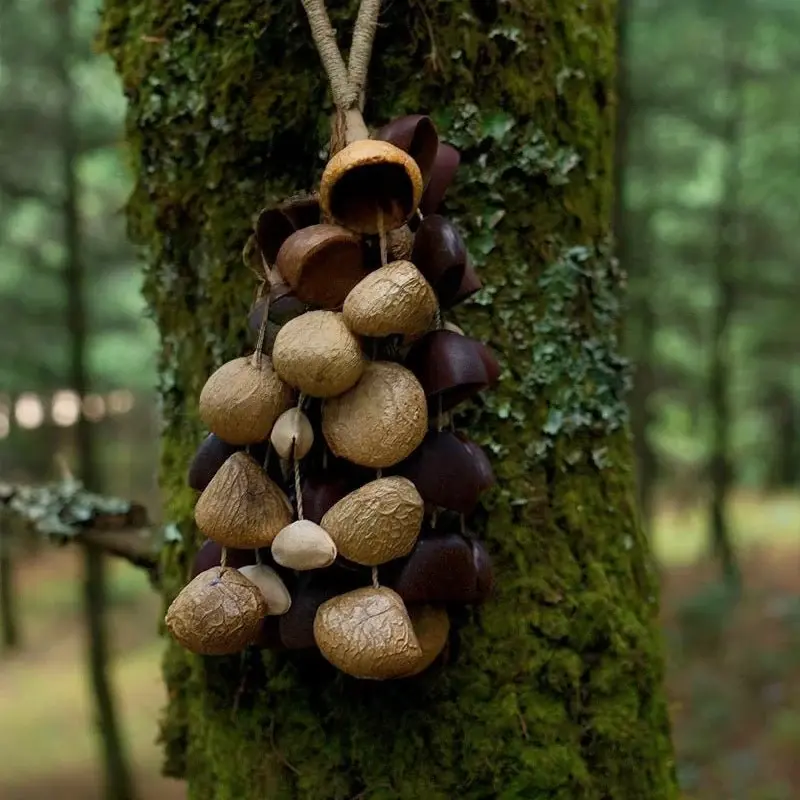
Singing bowls and gongs usually get the spotlight in sound meditation, but some of the most effective tools in a practitioner's kit are far simpler: dried seed shells and hollowed nutshells bound together and shaken. Natural rattles such as the chacha, the juju shaker, and the pangi shaker add texture, movement, and a sense of organic space that tuned instruments can't provide. This guide looks at how each instrument is built, how it produces sound, and how practitioners use it in a session.
How Natural Rattles Produce Sound
Acoustically, all three are idiophones: instruments whose own material vibrates to make sound, with no strings, membranes, or reeds. In the Hornbostel–Sachs classification they fall under shaken idiophones, or rattles. When you shake one, dozens of small, hard shells collide. Each impact is a short transient, a burst of energy that decays within milliseconds. Because the collisions happen at slightly different times and the shells differ in size, wall thickness, and density, the result is not a single pitch but a dense cloud of overlapping clicks spread across a wide frequency range.
This broadband, non-pitched quality is exactly what makes rattles useful in meditation. A crystal bowl holds a steady tone the ear can lock onto; a rattle offers no tonal center, so the listener's attention moves with the texture rather than fixing on a note. Many listeners experience it as similar to rain, wind in leaves, or moving water, familiar natural sounds the nervous system tends to read as safe. Practitioners use that quality to open and close sessions, mark transitions, and gently bring attention back to the body.
The Chacha Shaker

The chacha is a seed shaker built from clusters of small, pale, triangular seed shells. Each shell is cleaned, dried, and threaded onto a thin cord, and the strands hang together from a wrapped loop handle. Seed rattles are among the oldest instruments humans have made, and the chacha belongs to that long tradition of turning dried plant material into sound.
Construction: Dozens of lightweight shells hang on strands of different lengths, so they swing freely and strike each other from many angles. Because the shells are thin-walled and split open along a seam, each one behaves like a tiny hollow bell rather than a solid bead.
Sound profile: Light, dry, and articulate, with a crisp clicking texture and a fast decay. A gentle shake sounds like a soft rain shower or rustling dry leaves; a firmer shake produces a bright, clattering cascade. The many small shells create a dense, even texture with little low-end weight.
In a session: The chacha's clarity makes it a strong tool for clearing and opening. Practitioners often sweep it slowly around the body at the start of a session, or use a light, steady pulse to support breathwork before guiding the group into deeper relaxation.
The Juju Shaker

The juju shaker is a seed rattle associated with West Africa; many juju shakers made today use seeds sourced from Ghana. Its dark brown, polished seed casings are cut into half-shell shapes and strung in strands from a loop handle. Rattles of this kind have long been part of traditional music, dance, and communication.
Construction: The half-moon shells are hard and dense, with an open, cupped side. As the strands swing, the curved backs and open faces strike one another, producing a mix of sharper clicks and softer, slightly hollow knocks.
Sound profile: Warmer and woodier than the chacha, with a smooth, rounded rustle often compared to dry leaves or pebbles rolling in sand. Dynamic control is excellent: the juju can be barely audible or surprisingly present depending on the force of the shake.
In a session: Its gentle, rounded attack suits close work near the ears and head, where sharper sounds could startle. It layers beautifully over sustained bowl or gong tones, adding movement and texture without masking the fundamental.
The Pangi Shaker

The pangi shaker is made from the seeds of Pangium edule, a tall evergreen tree native to the rainforests and mangrove swamps of Southeast Asia, including Indonesia, Malaysia, Papua New Guinea, and the Philippines. Its large fruit holds many hard seeds with a distinctive grooved, vein-like surface, each about the size of a walnut. For instruments, the seeds are cleaned, hollowed, and strung in clusters from a rope or rattan handle.
Sound profile: Because each shell is hollow, it acts as a tiny resonating chamber. That gives the pangi a deeper, rounder, more wooden voice than the other two: a full-bodied clatter often described as a waterfall or rain falling on wood. Larger clusters project well across a room, which is why pangi shakers are popular in drum circles and group sound baths.
In a session: The pangi is ideal for grounding and for evoking water. A slow, rolling motion produces a continuous cascade that pairs naturally with ocean drums and frame drums, while a single gentle shake can signal a transition without breaking the meditative state.
Quick Comparison
Chacha: pale, thin-walled triangular seed shells. Light, dry, and crisp. Best for clearing, opening a session, and breathwork.
Juju: dark, dense half-shell seed casings, associated with West Africa. Warm, rounded, woody rustle. Best for close work near the head and for layering.
Pangi: hollowed Pangium edule seeds from Southeast Asia. Deep, resonant, and full-bodied. Best for grounding and water imagery in group settings.
Technique and Care
Think of a rattle as a texture instrument rather than a rhythm instrument. Small wrist rotations create a continuous wash; larger arm movements produce distinct waves; stopping abruptly creates a moment of silence the listener feels as strongly as the sound itself. Vary distance as well, since the same shake sounds very different at arm's length than a few inches from the ear.
All three are made from natural materials, so keep them dry and away from extreme heat or humidity. Clean them with a dry cloth rather than water, check the cords periodically, and expect each instrument to have its own slightly unique voice.
Experience Them at Diauko Sound Meditation
At Diauko Sound Meditation in Lake Forest, chacha, juju, and pangi shakers are woven into our sessions alongside bowls, gongs, and drums. According to our customers, these natural rattles are among the most memorable parts of the experience. Many tell us the chacha helps them let go at the start of a session, the juju's warm rustle feels deeply soothing, and the pangi's waterfall sound leaves them grounded and calm. If you'd like to experience these instruments for yourself, we'd love to welcome you to a session at Diauko.



Comments